


Dinosaur Life
Experience life as Earth’s most legendary creatures in Dinosaur Life, the ultimate prehistoric survival adventure.
The possibilities are endless
- Every decision shapes your survival in this dynamic, living ecosystem.
- Will you rise to the top of the food chain? Play now and leave your mark in prehistory!
- Like the game and join the group for 500 coins and a +10% coins multiplier!
- Roblox premium members earn 15% more coins. Multipliers add up!
- Exploiters will be banned permanently with no appeal!
Active
Favorites
Visits
Updated
07/10/26
Dinosaur life
Badges
Earn exclusive badges as you explore the prehistoric world. Each badge marks your achievements, from survival milestones to epic dinosaur challenges.

Joined
You joined Dinosaur Life!
Easy

Predator Escape
Escape after an attacked of a carnivore / omnivore.
Challenging

Storm survivor
Survive a thunderstorm.
Extreme

Night Survivor
Survive a complete in-game night.
Extreme

Day Survivor
Survive a complete in-game day (24h).
Insane

Touched Meteor
You touched a meteor that fell from the sky.
Insane

Master Explorer
Explore all map areas in the game.
Impossible

Thunder-struck
Struck by lightning!
Impossible

Full House
Be in a group with atleast 15 members.
Impossible

Steaming Out
You have been hit by a steaming geyser!
Insane

Survivor 1
Survive for 1h.
Extreme

Survivor 2
Survive for 5h.
Insane

Survivor 3
Survive for 25h.
Impossible

Survivor 4
Survive for 100h.
Impossible

Survivor 5
Survive for 350h.
Impossible

On Leaderboard
You are on the leaderboard!
Impossible
Game passes
Optional upgrades and lifetime perks for Dinosaur Life!
Dinosaur Life
Animals
Choose from the most iconic dinosaurs: T. rex, Triceratops, Velociraptor, and more. Each dinosaur offers a unique way to survive and thrive in the prehistoric world.




Tyrannosaurus Rex
The Apex Predator of the Cretaceous
Tyrannosaurus rex was one of the largest and most fearsome carnivores to ever walk the Earth. With a massive skull, bone-crushing bite, and powerful legs, it dominated the prehistoric landscape as an apex predator. Its keen senses and sheer strength allowed it to hunt large prey like Triceratops and Edmontosaurus, while also scavenging when the opportunity arose.
Despite its dominance, T. rex was not invincible. Its tiny arms offered little utility, and it relied heavily on its legs for both hunting and balance. Injuries or exhaustion could put it at risk, especially against herds of defensive herbivores.
Strenghts
- Bone-crushing bite: among the most powerful jaws of any animal.
- Massive size and strength: few dinosaurs could challenge it directly.
- Keen senses: excellent vision and smell made it an effective hunter.
Weaknesses
- Tiny arms: limited use for grappling or climbing.
- Slow acceleration: powerful but not built for long chases.
- High food demands: needed frequent large kills or scavenging to survive.
land spinosaurus
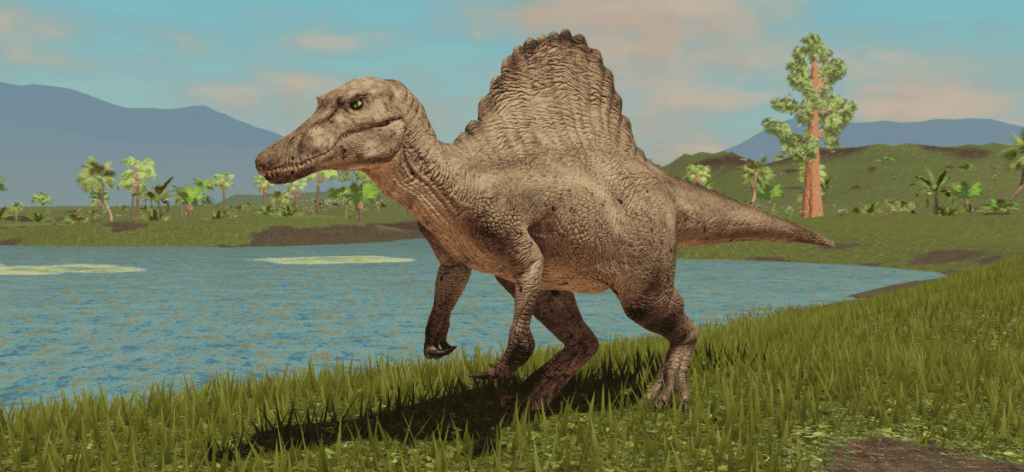
The Sail-Backed Stalker of the Cretaceous
Land Spinosaurus was a towering apex predator that ruled the prehistoric floodplains of North Africa during the mid-Cretaceous. While its cousin thrived in the rivers, this terrestrial variant evolved to dominate the open land — using its immense size, powerful jaws, and crushing claws to ambush prey on solid ground. With a tall, distinctive sail rising from its back, it stood as one of the most imposing carnivores of its era, blending raw strength with patient, stalking tactics.
Strenghts
- Pounce attack: launches from cover to pin prey in a single leap.
- Massive size: few dinosaurs could challenge it directly.
- Keen senses: excellent vision and smell made it an effective hunter.
Weaknesses
- Cannot jump: relies entirely on ground movement and pouncing.
- High food and water demands: drains hunger and thirst quickly.
- Exposed sail: the tall back-fin makes it easy to spot from a distance.

Ankylo-saurus
The Armored Tank of the Cretaceous
Ankylosaurus was one of the best-defended dinosaurs, protected by a body covered in heavy armor and a massive club tail.
Slow but steady, this herbivore could fend off even the most fearsome predators with its crushing blows. Its low stance and tough hide made it almost impossible to bring down when fully grown.
But its great defense came at a cost. Ankylosaurus was slow and not built for running, relying on armor and its tail rather than speed. Without cover or a herd, it could still be surrounded by determined predators.
Strenghts
- Heavy armor: bony plates made it extremely hard to injure.
- Club tail: a powerful weapon capable of breaking bones.
- Predator deterrent: even large carnivores hesitated to attack.
Weaknesses
- Slow movement: could not outrun predators.
- Poor eyesight/awareness: low to the ground, with limited view of surroundings.
- Vulnerable if flipped: exposed underbelly was its greatest weakness.

Gallimimus
The Swift Runners of the Prehistoric Plains
Gallimimus was a fast, ostrich-like dinosaur that thrived in herds across open landscapes.
With long legs and lightweight bodies, they relied on speed and agility to escape predators rather than brute strength. Their sharp eyes helped them spot danger early, and moving in large groups gave them extra protection.
While excellent runners, Gallimimus had little in the way of defense. Without strong claws or teeth, they were easy prey if caught, relying entirely on their speed and numbers to survive.
Strenghts
- Incredible speed: among the fastest dinosaurs, perfect for outrunning predators.
- Herd safety: protection in numbers helps reduce individual risk.
- Excellent eyesight: could detect danger early in open terrain.
Weaknesses
- No natural weapons: lacked strong claws, horns, or teeth for defense.
- Vulnerable alone: easy prey if separated from the herd.
- Low stamina in sprints: fast bursts, but unable to outrun predators for long distances.

Stegosaurus
The Plated Guardian of the Jurassic
Stegosaurus is one of the most recognizable dinosaurs, famous for the double row of bony plates along its back and the sharp spikes on its tail.
A peaceful plant-eater, Stegosaurus spent most of its time grazing on low vegetation. When threatened, it could swing its spiked tail—called a thagomizer—with devastating force, making predators think twice before attacking.
Despite its defensive weapons, Stegosaurus had weaknesses. Its small brain limited awareness, and its size made it slow and vulnerable to fast or coordinated predators.
Strenghts
- Thagomizer tail: deadly spikes capable of killing predators.
- Armored plates: offered protection and intimidation.
- Large size: jard for smaller predators to attack directly.
Weaknesses
- Small brain: limited awareness and slower reactions.
- Slow speed: could not outrun agile predators.
- Weak underbelly: less protection compared to its back and tail.

carnotaurus
The Horned Speed Predator
Carnotaurus was a swift and agile hunter that thrived on open plains. Built for speed rather than brute strength, it could sprint across the landscape in pursuit of prey. Its distinctive horns above the eyes gave it an intimidating appearance and may have been used in rival confrontations or displays of dominance. With its streamlined body and powerful legs, Carnotaurus relied on quick strikes and relentless pursuit to secure a meal.
However, Carnotaurus sacrificed durability for agility. Its arms were extremely small and offered little help in combat, and its lighter build meant it could not withstand prolonged fights with larger predators. To survive, it depended on speed, timing, and surprise attacks rather than raw power.
Strenghts
- Speed: one of the fastest large carnivores.
- Agile hunter: excels at chasing prey in open terrain.
- Intimidating horns: useful for rival displays.
Weaknesses
- Low durability: less resilient than larger predators.
- Tiny arms: little use during combat.
- Needs open ground: speed is less effective in dense areas.

Triceratops
The Three-Horned Titan of the Cretaceous
Triceratops was one of the most iconic herbivores, known for its massive frill and three deadly horns. Living in herds, it used its horns to defend against predators and even challenge rivals. Its size and strength made it one of the few dinosaurs capable of standing up to Tyrannosaurus in a head-to-head fight.
Despite its power, Triceratops was still vulnerable. Predators could overwhelm calves or injured adults, and its bulk made it slower compared to nimbler prey dinosaurs.
Strenghts
- Deadly horns: capable of goring and killing predators.
- Protective frill: shielded its neck and intimidated attackers.
- Herd defense: groups of Triceratops could form strong defenses.
Weaknesses
- Slow speed: could not outrun large predators.
- Vulnerable young: calves were easy targets without herd protection.
- High food needs: constant grazing required to maintain its bulk.

Velociraptor
The Pack Hunters of the Cretaceous
Velociraptors were cunning predators, hunting in coordinated packs to bring down prey much larger than themselves.
With razor-sharp claws, powerful jaws, and speed, they were agile killers of the prehistoric world. Their intelligence and teamwork made them dangerous opponents, capable of ambushing and overwhelming even swift dinosaurs.
Despite their hunting prowess, raptors were not the largest predators and had to avoid confrontation with giant carnivores like Tyrannosaurus. Alone, a raptor was far more vulnerable and relied heavily on its pack for survival.
Strenghts
- Pack coordination: hunting in groups to take down larger prey.
- Deadly claws: sickle-shaped talons capable of inflicting fatal wounds.
- Speed and agility: quick movements for chasing and ambushing prey.
Weaknesses
- Small size: weaker compared to giant predators
- Reliance on pack: far less effective when hunting alone.
- Fragile build: light body made them vulnerable to strong attacks.

Pachycephalosaurus
The Dome-Headed Defender of the Cretaceous
Pachycephalosaurus was a medium-sized herbivore known for its thick, domed skull — up to 25 cm (10 in) of solid bone. This unique feature made it one of the most distinctive dinosaurs of the Late Cretaceous. It likely used its reinforced head for dominance contests, ramming rivals or displaying strength during mating rituals. Its strong hind legs and lightweight build also made it surprisingly agile for its size.
However, Pachycephalosaurus wasn’t built for long endurance or heavy combat. Its dome, though powerful, offered little protection against large predators, and its short arms limited its ability to defend itself. It relied more on speed and intimidation than brute force when threatened.
Strenghts
- Armored skull: thick dome was ideal for head-butting rivals.
- Agile runner: strong legs allowed quick sprints to escape danger.
- Intimidating displays: head-butting and posture could deter predators.
Weaknesses
- Limited reach: short forelimbs restricted its ability to grasp.
- Vulnerable body: aside from its skull, the rest of its body lacked armor.
- Poor endurance: bursts of speed were short, making escape difficult.

Water Spinosaurus
The River Hunter of the Cretaceous
Spinosaurus was one of the largest carnivorous dinosaurs, uniquely adapted for both land and water. With its long crocodile-like jaws and conical teeth, it specialized in catching fish but was also capable of hunting other dinosaurs that ventured too close to the water. Its sail-like back made it one of the most distinctive dinosaurs, and its semi-aquatic lifestyle gave it dominance in rivers and swamps.
However, Spinosaurus was less agile on land compared to other predators. Its reliance on waterways meant it was most dangerous near rivers and lakes, but more vulnerable when forced to travel across open ground.
Strenghts
- Semi-aquatic predator: master hunter in rivers and lakes.
- Massive size: larger than most other carnivores.
- Powerful jaws: perfect for grabbing slippery fish and smaller prey.
Weaknesses
- Less agile on land: slower and clumsier compared to other predators.
- Specialized diet: relied heavily on fish and water habitats.
- Exposed sail: large sail made it more visible to rivals and prey.
deinosuchus
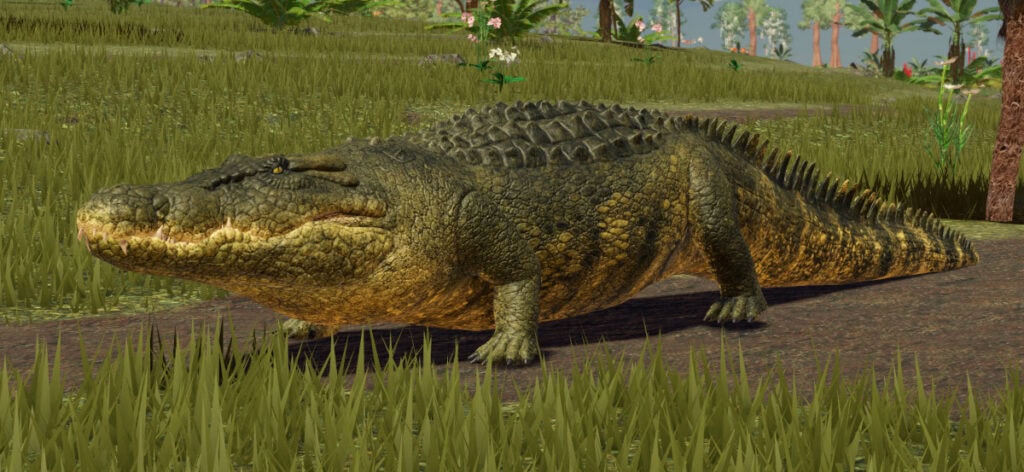
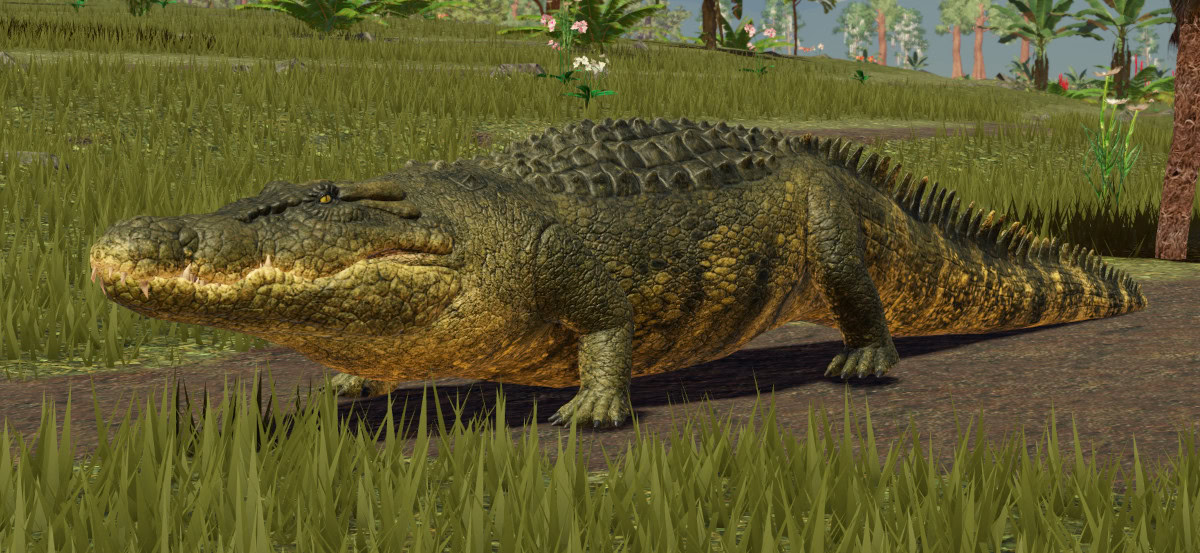
The Terrible Crocodile of the Cretaceous
Deinosuchus, whose name means “terrible crocodile”, was one of the largest crocodilian predators that ever lived, ruling the rivers, swamps, and coastlines of Late Cretaceous North America. Lurking just beneath the surface with only its eyes and nostrils showing, it ambushed anything that strayed too close to the water, dragging even large dinosaurs under with bone-crushing jaws. Heavily armored and built for the water, it was the undisputed king of the ancient waterways.
Strenghts
- Ambush pounce: attacks prey before it can react.
- Master swimmer: faster in water than on land.
- Powerful jaws: perfect for grabbing slippery fish and smaller prey.
Weaknesses
- Less agile on land: slower and clumsier compared to other predators.
- No jump: stuck to ground and water movement.
- Tied to water: must stay near rivers and lakes to thrive.

Mosasaurus
The Ocean Apex Predator
Mosasaurus was the undisputed ruler of the ancient seas. This colossal marine reptile, reaching lengths of over 15 meters, combined speed, power, and intelligence to dominate ocean ecosystems. With its long, muscular body and paddle-like limbs, it could propel itself swiftly through the water to ambush prey from below. Its massive jaws, lined with sharp conical teeth, were capable of crushing fish, ammonites, and even other marine reptiles.
However, as a fully aquatic creature, Mosasaurus was entirely dependent on the ocean. It needed to surface regularly for air, making it vulnerable during those moments. Though unmatched underwater, it was helpless on land — the sea was both its kingdom and its cage.
Strenghts
- Apex predator: supreme hunter of the prehistoric oceans.
- Incredible speed: capable of fast, agile movements underwater.
- Powerful bite: devastating jaws for crushing prey.
Weaknesses
- Surface dependence: must surface for air, risking exposure.
- Low land mobility: mostly helpless out of water.
- Cold-blooded nature: less active in cooler waters.

PTERANODON
The Skyborne Apex Glider
Pteranodon was a master of the prehistoric skies, effortlessly soaring above coastlines and open seas. With its massive wingspan and lightweight body, it relied on air currents to travel vast distances while conserving energy. From high above, it could spot fish near the water’s surface before diving down with precision to snatch its prey.
Despite its dominance in the air, Pteranodon was not built for combat. Its hollow bones and fragile frame made it vulnerable when grounded, forcing it to rely on altitude and awareness for survival. The skies were its sanctuary — but a single mistake could be fatal.
Strenghts
- Superior flight: exceptional gliding and aerial mobility.
- Wide vision: easily spots prey from high altitudes.
- Low stamina use: efficient long-distance travel.
Weaknesses
- Fragile body: low durability in direct combat.
- Grounded danger: extremely vulnerable when landing.
- Limited attacks: relies on precision over power.

Brachiosaurus
The Towering Giant of the Jurassic
Brachiosaurus was one of the largest herbivorous dinosaurs, instantly recognizable by its long neck and towering stance. Unlike most other sauropods, its front legs were longer than its hind legs, giving it a more upright posture perfect for reaching the highest treetops. Its enormous size allowed it to feed where few others could, making it a dominant browser of the Jurassic forests.
Despite its impressive stature, Brachiosaurus was not built for speed or defense. It relied on its massive size to deter predators rather than agility or strength. Living in herds may have provided additional protection, but its sheer bulk also meant it required vast amounts of vegetation to sustain itself.
Strenghts
- Towering height: able to reach treetops untouched by other herbivores.
- Massive presence: sheer size deterred most predators from attacking.
- Long neck: efficient at feeding over wide areas without moving much.
Weaknesses
- Slow and heavy: limited speed and maneuverability made it vulnerable.
- Huge food needs: required vast amounts of vegetation daily to survive.
- Limited defense: lacked horns, armor, or other active defenses.


Bring the prehistoric world with you!
Shop Merchandise
Explore our exclusive range of Dinosaur Life t-shirts, hats, and more. Perfect for every fan.


Dinosaur Life
Latest news
Stay up to date with the latest Dinosaur Life updates, news, and announcements.
- 09/05/2026
- 06/01/2026
- 09/11/2025
- 22/10/2025