

Savannah Life
The possibilities are endless
Become a lion and lead your pride to glory. Feel the thunder of the savannah as a powerful elephant, or stalk the watering holes as a deadly crocodile, lurking just beneath the surface. With a wide variety of animals to choose from, the possibilities are endless!
- Every choice matters in this living, breathing ecosystem.
- Will you rise to the top of the food chain? Play now and find out!
- Like the game and join the group for 500 coins and a +10% coins multiplier!
- Roblox premium members earn 15% more coins. Multipliers add up!
- Exploiters will be banned permanently with no appeal!
Active
Favorites
Visits
Updated
07/10/26
Savannah Life
Badges
Earn exclusive badges as you explore the savannah. Each badge marks your achievements, from survival milestones to legendary challenges.

Joined
You joined Savannah Life!
Easy

Predator Escape
Escape after an attacked of a carnivore / omnivore.
Hard

Storm survivor
Survive a thunderstorm.
Extreme

Night Survivor
Survive a complete in-game night.
Extreme

Day Survivor
Survive a complete in-game day (24h).
Insane

Blood Moon
Experience the rare bloodmoon event.
Impossible

Master Explorer
Explore all map areas in the game.
Impossible

Thunder-struck
Struck by lightning!
Impossible

Full House
Be in a group with atleast 15 members.
Impossible

The Big Five
Own the Big Five: Elephant, Rhino, Lion, Leopard and Buffalo.
Impossible

Survivor 1
Survive for 1h.
Extreme

Survivor 2
Survive for 5h.
Insane

Survivor 3
Survive for 25h.
Impossible

Survivor 4
Survive for 100h.
Impossible

Survivor 5
Survive for 350h.
Impossible

On Leaderboard
You are on the leaderboard!
Impossible

Tester
Only for testers.
Impossible
Game passes
Optional upgrades and lifetime perks for Savannah Life!
Savannah Life
Animals
Choose from Africa’s most iconic animals: lions, elephants, rhinos, cheetahs, and more. Each animal offers a unique way to survive and thrive in the savannah.


Lion
The Kings of the Savannah
Lions are the only truly social big cats, living in prides that dominate the savannah. Working together, they can take down large prey like buffalo, giraffes, and even young elephants. Males use their size and power to defend the pride, while lionesses are skilled hunters who rely on teamwork and strategy. With their iconic roar and fearsome strength, lions are among the most feared predators in Africa.
But lions are not invincible. They tire quickly compared to other predators, and competition from hyenas and rival prides can threaten their hunts and territories. Survival often depends on cooperation and the strength of the pride.
Strenghts
- Powerful hunters: strong enough to bring down large prey.
- Pride teamwork: cooperation makes them highly effective predators.
- Territorial dominance: few animals challenge lions for control of land.
Weaknesses
- Low stamina: tire quickly during long chases.
- High competition: constant rivalry with hyenas, leopards, and other prides.
- Vulnerable alone: a single lion is far less effective without the pride.

Baboon
Clever Troublemakers of the Savannah
Baboons are highly intelligent primates that thrive in large troops across the savannah and woodlands. Known for their resourcefulness, sharp eyesight, and loud calls, they are skilled at spotting predators early. Baboons eat a wide variety of foods, from fruits and roots to insects, making them adaptable survivors. They can also be fierce fighters, using sharp teeth and numbers to defend themselves.
Despite their intelligence and strength, baboons are smaller than many savannah animals and face danger from leopards, lions, and even other predators. Their reliance on troops makes solitary baboons particularly vulnerable.
Strenghts
- Sharp eyesight and alarms: excellent at spotting predators and warning the troop.
- Strong social bonds: troops protect each other and can overwhelm threats.
- Powerful bite: strong jaws and sharp teeth can cause serious injuries.
Weaknesses
- Smaller size: vulnerable to larger predators like leopards and lions.
- Reliance on troop: alone, a baboon has little chance of survival.
- At risk on the ground: safer in trees, but vulnerable when traveling on land.

Bush Elephant
The Gentle Giants of the Savannah
Elephants are the largest land animals on Earth, known for their intelligence, memory, and strong family bonds. They shape the savannah by knocking down trees, digging for water, and creating pathways other animals use. Their tusks and massive size make them nearly untouchable by predators, while their trunks give them unmatched strength and dexterity.
Despite their power, elephants face challenges. Calves are vulnerable to lions and hyenas, and even adults can struggle during droughts when water and food become scarce. Their size also means they must constantly eat, making survival difficult in harsh conditions.
Strenghts
- Massive strength: size and power make them nearly invincible.
- Tusks and trunk: versatile tools for defense, feeding, and survival.
- Strong social bonds: herds protect and care for one another.
Weaknesses
- Vulnerable calves: young elephants are frequent targets for predators.
- High food and water needs: must eat and drink constantly to survive.
- Slow speed: powerful but not built for fast escapes.

African Buffalo
The Unyielding Giants of the Herd
African buffalo are among the most powerful and dangerous grazers of the savannah. Living in massive herds, they are fearless defenders of their own and will charge predators without hesitation. Their immense strength, sharp horns, and unpredictable nature make them one of the few herbivores that even lions fear.
Despite their power, buffalo must remain near water and rely heavily on the herd for protection. Separated individuals are far more vulnerable to predators.
Strenghts
- Immense strength: can knock down and gore predators with ease.
- Protective herd behavior: will band together to defend calves and injured members.
- Fearless nature: even lions and other apex predators often hesitate to attack.
Weaknesses
- Dependence on water: need to stay near watering holes to survive.
- Vulnerable when isolated: alone, they are easier targets for coordinated predators.
- Slower than other grazers: rely more on strength than speed to survive.

Cheetah
The Swift Shadows of the Savannah
Cheetahs are the fastest land animals on Earth, capable of reaching incredible speeds in short bursts to chase down prey. With their slender build, spotted coats, and keen eyesight, they rely on stealth and explosive acceleration to hunt successfully in open grasslands. Unlike other big cats, cheetahs hunt mainly during the day to avoid competition.
But their speed comes at a cost—cheetahs have low stamina and weak defenses. Larger predators such as lions, leopards, and hyenas often steal their kills, and they must avoid fights they cannot win.
Strenghts
- Unmatched speed: the fastest sprinter on land, ideal for chasing down prey.
- Stealth hunters: excellent camouflage and stalking ability in tall grass.
- Keen eyesight: can spot prey from great distances during daylight.
Weaknesses
- Low stamina: can only maintain top speed for very short bursts.
- Weak physical defense: vulnerable to stronger predators in a fight.
- Prone to losing kills: frequently robbed by lions, leopards, and hyenas.

Giraffe
The Towering Watchers of the Savannah
Giraffes are the tallest animals on Earth, using their incredible height to browse on treetops beyond the reach of other grazers. Their long necks not only help them feed but also provide excellent vantage points to spot predators from afar. Despite their calm appearance, giraffes can defend themselves with powerful kicks capable of injuring or killing even lions.
However, their size can also be a disadvantage. Giraffes are awkward and vulnerable when bending down to drink, and calves are frequent targets for predators. They rely on vigilance and open terrain to stay safe.
Strenghts
- Towering height: excellent vision to spot predators early.
- Access to treetops: can feed where few other animals can reach.
- Powerful kicks: deadly defense against predators.
Weaknesses
- Vulnerable calves: young giraffes are frequent targets for lions.
- Awkward at waterholes: bending down makes them easy prey.
- Slow acceleration: large size makes quick getaways difficult.

Hippopotamus
The Deadly Giants of the River
Hippos are massive, semi-aquatic herbivores that spend most of their time in rivers and lakes. Despite their bulky appearance, they are surprisingly fast on land and incredibly dangerous in the water. With huge jaws and sharp teeth, hippos can be extremely aggressive when defending their territory. Few animals dare to challenge them directly.
But hippos have their limits. They overheat quickly if kept out of water too long, and calves are vulnerable when separated from the herd. Their aggression often leads to conflict, not only with predators but also among themselves.
Strenghts
- Immense power: huge size and strong jaws make them deadly in a fight.
- Aquatic dominance: fast and agile in water, with rivers as safe havens.
- Territorial aggression: fearless against most threats, including predators.
Weaknesses
- Dependence on water: vulnerable when forced to stay on land.
- Vulnerable calves: young hippos are frequent targets for predators.
- Unpredictable aggression: can injure themselves or waste energy in constant fights.

Hyena
The Ruthless Survivors of the Savannah
Hyenas are cunning and powerful predators, often underestimated because of their scavenging habits. In reality, they are skilled hunters with strong jaws capable of crushing bone, and they live in complex clans ruled by dominant females. Hyenas can take down large prey when working together and are relentless in their pursuit, rarely giving up once a chase has begun.
Although successful hunters, hyenas face constant competition from lions and must often fight for territory and food. Their reputation as scavengers also means they are seen as opportunists rather than noble hunters.
Strenghts
- Incredible jaw strength: can consume almost every part of a carcass.
- Clan teamwork: large groups that can overpower much larger animals.
- Relentless persistence: rarely give up during a hunt or fight.
Weaknesses
- Constant rivalry with lions: often lose kills to stronger predators.
- Poor reputation: seen as scavengers, which attracts conflict with others.
- Vulnerable alone: a single hyena is much less dangerous without its clan.

Impala
Masters of Agility in the Savannah
Impala are graceful antelopes known for their incredible speed and leaping ability. Living in large herds, they are always alert to the dangers of the savannah.
Their agility and quick reactions make them difficult prey, often escaping predators with sudden, powerful jumps. Impalas thrive in grasslands and woodlands, where their numbers and agility give them an edge against predators.
Strenghts
- Exceptional speed and agility: can outrun and outmaneuver many predators with bursts of speed and high jumps.
- Herd protection: safety in numbers makes ambushes harder for predators.
- Endurance: capable of sustained running and covering long distances to escape threats.
Weaknesses
- Low physical strength: no strong horns or natural weapons compared to larger antelope.
- High dependence on herd: alone, they are much more vulnerable.
- Limited defense options: survival relies on fleeing rather than fighting back.

Wildebeest
The Relentless Migrant of the Savannah
The mighty wildebeest — one of the most iconic survivors of the plains — roams the grasslands in vast herds, driven by the rhythm of rain and grazing. With powerful legs and a body built for endurance, it undertakes epic migrations in search of fresh grass and water, turning the savannah into a moving sea of life. Its strength lies in numbers, vigilance and sheer stamina.
Yet the wildebeest still faces its share of dangers: river crossings, predators, and the unforgiving heat of the dry season all test its resolve. Even in massive that moving tide, a calf or the isolated wanderer can become prey or fall behind.
Strenghts
- Massive herds: safety in numbers means predators have it harder.
- Migration: By following the seasonal rains and grass, they maintain access to fresh food and water and avoid many competitors.
- Endurance: can sprint and maintain steady movement across long distances.
Weaknesses
- Food: when resources dry up or migration routes are blocked, they are at great risk.
- River crossings: high-risk moments with danger from predators.
- Vulnerable calves: despite the strength of the group, calves, weak or stray individuals remain prey for lions, hyenas and crocodiles.

porcupine
The Spiny Defender of the Savannah
Porcupines are Africa’s largest rodents, instantly recognizable by the long, sharp quills covering their back and tail. Mostly active at night, they roam the savannah in search of roots, bulbs, bark, and fallen fruit, using their strong claws to dig and forage. When threatened, porcupines raise their quills, stamp their feet, and rattle their tail to warn predators. If the warning is ignored, they charge backwards with surprising speed, driving their razor-sharp quills into any attacker — injuries serious enough to wound or even kill lions and leopards.
Despite this formidable defense, porcupines are slow and have poor eyesight, relying heavily on burrows for shelter during the day. Young porcupines have softer quills and are far more vulnerable to predators, while adults can still be overwhelmed if caught in the open or attacked by coordinated groups.
Strenghts
- Deadly quills: sharp, barbed spines that can seriously injure even large predators.
- Defense: stamping, rattling, and reverse charges make attacks risky for any hunter.
- Burrow shelters: use underground dens for safety, resting, and raising young.
Weaknesses
- Slow: cannot outrun predators and relies entirely on defense.
- Poor eyesight: depends on hearing and smell to detect nearby threats.
- Vulnerable young: offspring have soft quills and need protection until fully grown.
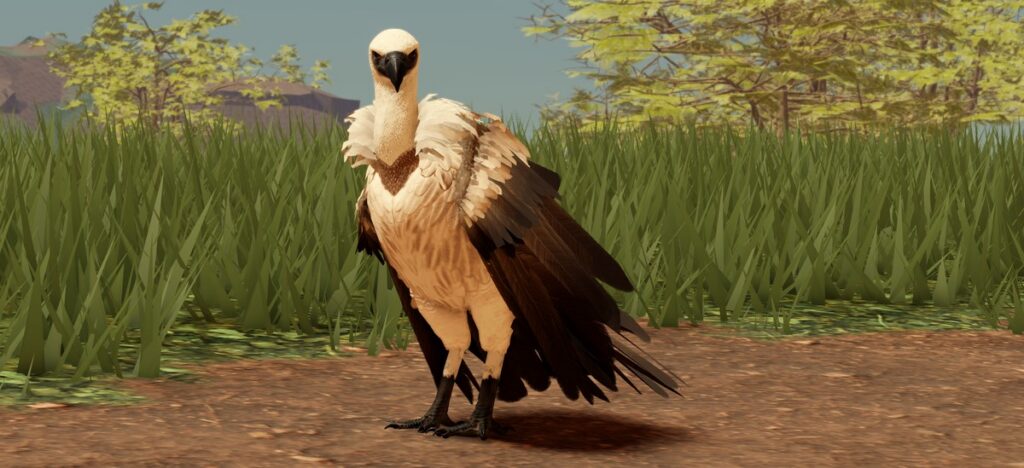
Vulture
The Soaring Scavengers of the Savannah
Vultures are the savannah’s master scavengers, spending hours circling high above the plains on rising warm air. Their exceptional eyesight lets them spot a carcass from kilometres away, and their powerful hooked beaks tear through hide that few other animals can open. A highly resistant stomach allows them to feed on carrion that would sicken almost any other creature, making them the clean-up crew that keeps the savannah healthy.
However, vultures are built for soaring rather than fighting. Their light frames leave them outmatched in any direct confrontation, and on the ground they are slow and awkward, needing space and effort to get airborne again. They also depend on the kills of others to eat, often waiting their turn while stronger predators feed first.
Strenghts
- Exceptional eyesight: spots carcasses and danger from great distances.
- Soaring flight: rides warm air currents to cover huge areas with little effort.
- Iron stomach: safely feeds on carrion that would sicken other animals.
Weaknesses
- Weak in combat: light build offers little defense against predators.
- Clumsy on the ground: slow to move and needs space to take off.
- Dependent on others: relies on kills made by predators for food.

Leopard
The Silent Stalkers of the Savannah
Leopards are solitary and stealthy predators, known for their ability to adapt to almost any environment. They are powerful climbers, often dragging kills high into trees to keep them safe from scavengers. With their spotted coats and incredible patience, leopards excel at ambushing prey with sudden, explosive attacks.
Unlike lions and cheetahs, leopards avoid open chases, relying instead on cunning and strength. However, living and hunting alone makes them vulnerable to larger groups of predators.
Strenghts
- Stealth and ambush: masters of surprise attacks, striking before prey can react.
- Tree climbing: can carry kills into trees, safe from scavengers.
- Adaptability: thrive in diverse habitats, from open savannahs to dense forests.
Weaknesses
- Solitary lifestyle: lacks the protection of a pride or clan.
- Easily outnumbered: struggles against packs of hyenas or prides of lions.
- Territorial disputes: frequent conflict with other big predators.

Nile Crocodile
The Silent Killers of the River
Nile crocodiles are ancient predators that dominate Africa’s rivers and lakes. Masters of stealth, they wait just beneath the water’s surface, striking with lightning speed when prey comes to drink. With their immense bite force and ability to drag animals underwater, crocodiles are among the deadliest ambush hunters in the savannah.
Despite their power, crocodiles are slow and vulnerable on land, and young crocodiles face high risks from birds, fish, and other predators before they reach adulthood.
Strenghts
- Ambush mastery: deadly surprise attacks from the water’s edge.
- Immense bite force: capable of holding and drowning large prey.
- Aquatic dominance: strong swimmers that control rivers and lakes.
Weaknesses
- Slow on land: clumsy and vulnerable outside of water.
- Vulnerable young: hatchlings suffer high mortality rates.
- Cold-blooded limits: activity depends heavily on temperature and sun.

Ostrich
The Swift Runners of the Savannah
Ostriches are the largest birds in the world, built for speed and survival in the open plains. With their long legs, they can sprint at incredible speeds, outrunning most predators. Their sharp eyesight allows them to spot danger from far away, and when threatened, they can defend themselves with powerful kicks.
However, ostriches cannot fly and rely heavily on running to escape danger. Their eggs and chicks are especially vulnerable to predators, making vigilance and group defense essential for survival.
Strenghts
- Unmatched speed: the fastest two-legged runners on land.
- Keen eyesight: excellent vision to detect threats early.
- Powerful kicks: strong enough to injure or kill a predator.
Weaknesses
- Flightless: cannot escape by air, relying only on speed.
- Vulnerable young: eggs and chicks are easy targets for predators.
- Limited defense: adults are strong but lack offensive weapons.

flamingo
The Elegant Wader of Shallow Waters
Flamingos are graceful birds perfectly adapted to life in lakes, wetlands, and salt flats. Using their uniquely shaped beaks, they filter algae and small organisms from the water while standing on long, slender legs that keep them above the surface. Their strong social behavior and large flocks provide safety in numbers, allowing them to thrive in open environments.
However, flamingos are highly dependent on water-rich habitats and struggle to survive far from their feeding grounds. While capable of flight, they require long takeoff runs and open space, making them vulnerable to sudden attacks. Eggs and chicks are also at risk, relying heavily on group protection for survival.
Strenghts
- Specialized feeding: filtering allows access to food few animals can use.
- Strong social bonds: large flocks improve protection and survival.
- Long legs: effective for navigating shallow water and muddy terrain.
Weaknesses
- Habitat dependent: relies heavily on wetlands and shallow water areas.
- Slow takeoff: requires space and time to become airborne.
- Vulnerable young: eggs and chicks are exposed despite group nesting.

Yellow Hornbill
The Curious Foragers of the Savannah
Yellow hornbills are small, agile birds known for their intelligence and lively personalities. They spend most of their time searching for insects, seeds, and small creatures, using their long curved beaks to reach food hidden beneath leaves and rocks. Their alert nature and strong social bonds help them detect threats early and thrive in the busy savannah.
However, their small size makes them vulnerable to many predators, and their short, low-power flight means they rely more on quick movements and hiding rather than escaping by air. Nesting in tree cavities also exposes them to snakes and other dangers, making vigilance essential.
Strenghts
- High awareness: sharp vision and constant alertness help detect danger.
- Efficient forager: skilled at finding insects and food in tough environments.
- Social cooperation: benefits from group vigilance and shared feeding.
Weaknesses
- Limited flight: slower flight speed than most other savannah birds.
- Small size: easily targeted by predators such as lions and leopards.
- Vulnerable nests: nests are prone to predation.

Warthog
Stubborn Survivors of the Savannah
Warthogs are tough, resourceful animals often seen trotting through the grasslands with their tails held high. Known for their distinctive tusks and comical looks, they are surprisingly resilient survivors. Warthogs dig and live in burrows, giving them shelter and a safe retreat from predators. Despite their size, they can run fast in short bursts and aren’t afraid to fight when cornered.
Although hardy, warthogs are smaller than many other savannah animals and face constant danger from predators. Their reliance on burrows for safety also limits their mobility.
Strenghts
- Sharp tusks: effective natural weapons for defense against predators.
- Burrow shelters: use underground dens for safety and protection.
- Courageous fighters: known to stand their ground when threatened.
Weaknesses
- Small size: weaker than larger grazers and easy prey for big predators.
- Short stamina: can sprint quickly but tire out fast.
- Reliance on burrows: without shelter nearby, they are far more vulnerable.

Rhinoceros
The Armored Tanks of the Savannah
Rhinos are among the largest and most heavily built animals in the savannah. With their thick skin, massive size, and deadly horns, they are feared by predators and respected by all. A charging rhino can crush almost anything in its path, making them one of the most dangerous herbivores. Despite their bulk, they can run surprisingly fast for short distances.
However, rhinos have poor eyesight and rely heavily on smell and hearing to detect danger. Calves are vulnerable without their mothers, and their size makes them slow to escape when threatened.
Strenghts
- Massive strength: few animals can withstand a rhino’s charge.
- Deadly horns: natural weapons capable of killing predators.
- Thick hide: provides natural armor against attacks.
Weaknesses
- Poor eyesight: easily startled and prone to charging blindly.
- Vulnerable calves: young rhinos rely entirely on their mothers.
- Low stamina: can run fast briefly, but tire quickly.

Wild Dog
Relentless Hunters of the Savannah
African wild dogs are some of the most efficient predators in the savannah. Known for their strong pack bonds and coordinated hunting strategies, they can chase prey over long distances until exhaustion. Unlike many other predators, wild dogs rely on teamwork rather than sheer strength, making them one of the most successful hunters in Africa.
Despite their strengths, wild dogs face challenges. They are vulnerable when separated from the pack, and larger predators often steal their hard-earned kills.
Strenghts
- Pack coordination: work together to outmaneuver and overwhelm prey.
- Endurance hunters: can chase prey over long distances without tiring quickly.
- High success rate: among the most effective hunters in the savannah.
Weaknesses
- Vulnerable when alone: a single wild dog has little chance against larger animals.
- Weak physical defense: smaller size makes them easy targets for lions and hyenas.
- Scavenger competition: often lose kills to stronger predators.

Zebra
Striped Survivors of the Savannah
Zebras are iconic grazers of the African plains, instantly recognizable by their black-and-white stripes. They live in herds that offer protection from predators, and their stripes help confuse hunters during a chase. Zebras are tough and resilient, able to survive in harsh conditions by traveling long distances in search of food and water.
While their kicks and bites can be dangerous, zebras are still vulnerable to predators when isolated from the herd. Their survival depends on constant vigilance and sticking together.
Strenghts
- Protective herd behavior: herds keep watch and protect each other from danger.
- Powerful kick and bite: can seriously injure predators if threatened.
- Camouflage effect: stripes make it harder for predators to single out one individual.
Weaknesses
- Poor stamina: can’t maintain top speed for long chases.
- Dependence on water: need regular access to drinking water.
- Vulnerable when alone: an isolated zebra is an easy target.


Bring the savannah with you!
Shop Merchandise
Explore our exclusive range of Savannah Life t-shirts, hats, and more. Perfect for every fan.


Savannah Life
Latest news
Stay up to date with the latest Savannah Life updates, news, and announcements.
- 18/11/2025